By: Abdullahi Mohamed Haji
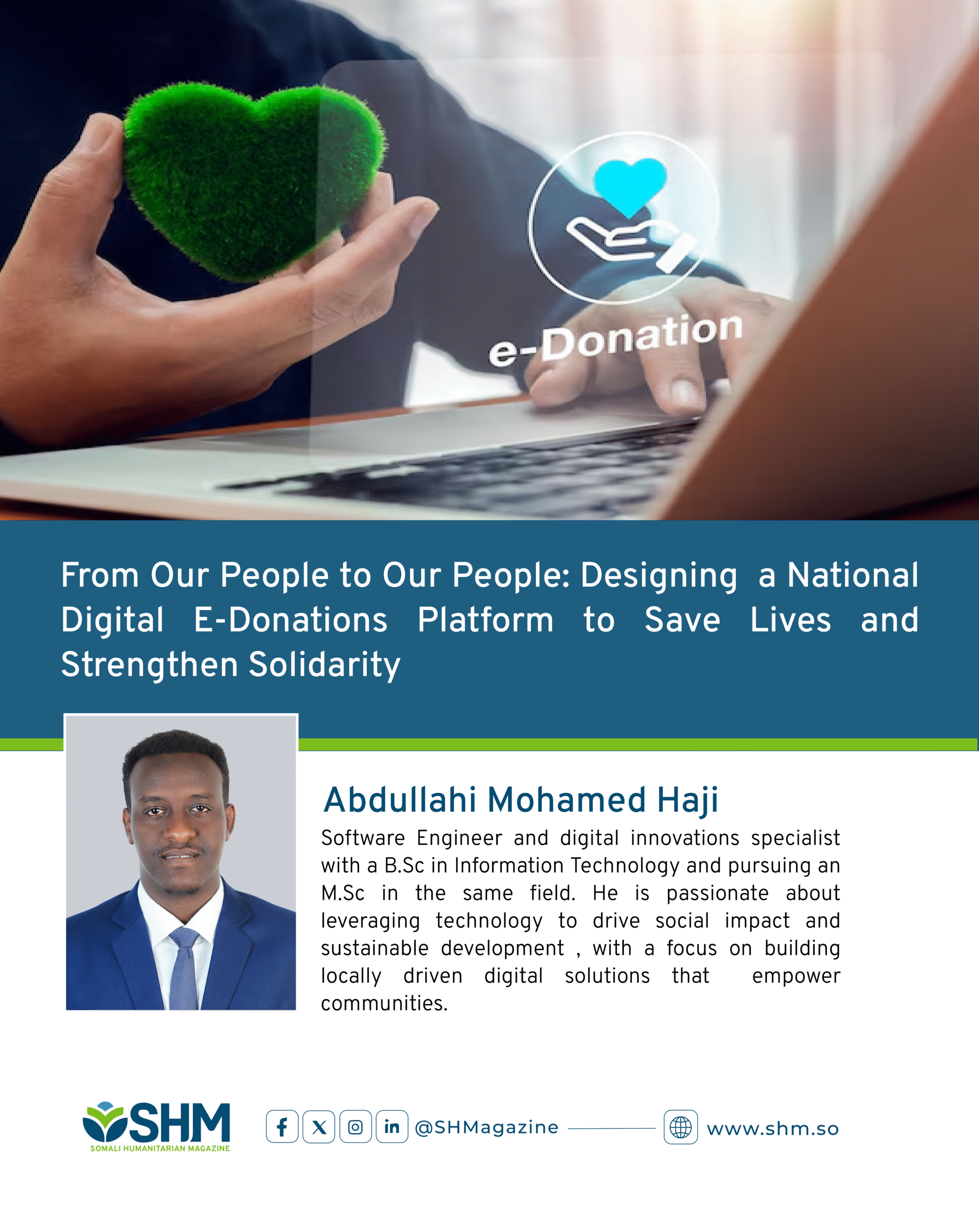
In Somalia, more than 99 % of our population share the Islamic faith, and the principle of Sadaqa charitable giving runs deep in our culture. Yet our humanitarian giving is still too reliant on foreign donors, external agencies and traditional aid models. We believe it is time to build a national, unified digital e-donations infrastructure one that allows Somalis to give from our people to our people, leveraging mobile money systems, internet connectivity, and trusted agencies to reach those most in need.
CONTEXT AND OPPORTUNITY
Somalia’s economy is showing signs of resilience. According to the Somalia National Bureau of Statistics (SNBS), real GDP grew by 4.1 % in 2024, and GDP per capita in current prices rose to USD 737 (up from USD 694 in 2023) as stated by Somali National Bureau of Statistics.
At the same time, Somalia’s digital footprint is expanding DataReportal Global Digital Insights estimates that by early 2025 about 10.7 million individuals were online, equating to an internet penetration of around 55.2 % of the population. Meanwhile, mobile money usage is extremely high in Somalia one report notes that mobile money penetration reached as much as 89 % of users, far ahead of the Sub-Saharan Africa average.
These facts present a powerful convergence: an economy growing (albeit modestly), an increasingly digitally connected citizenry, and a cultural tradition of giving. What we propose is to harness this convergence via a unified digital e-donations platform built on our local mobile money systems such as EVC, Edahab, Premier Wallet and managed by trusted Somali institutions (government agencies, NGOs, respected public figures).
WHY A UNIFIED NATIONAL E-DONATIONS SYSTEM IS NEEDED
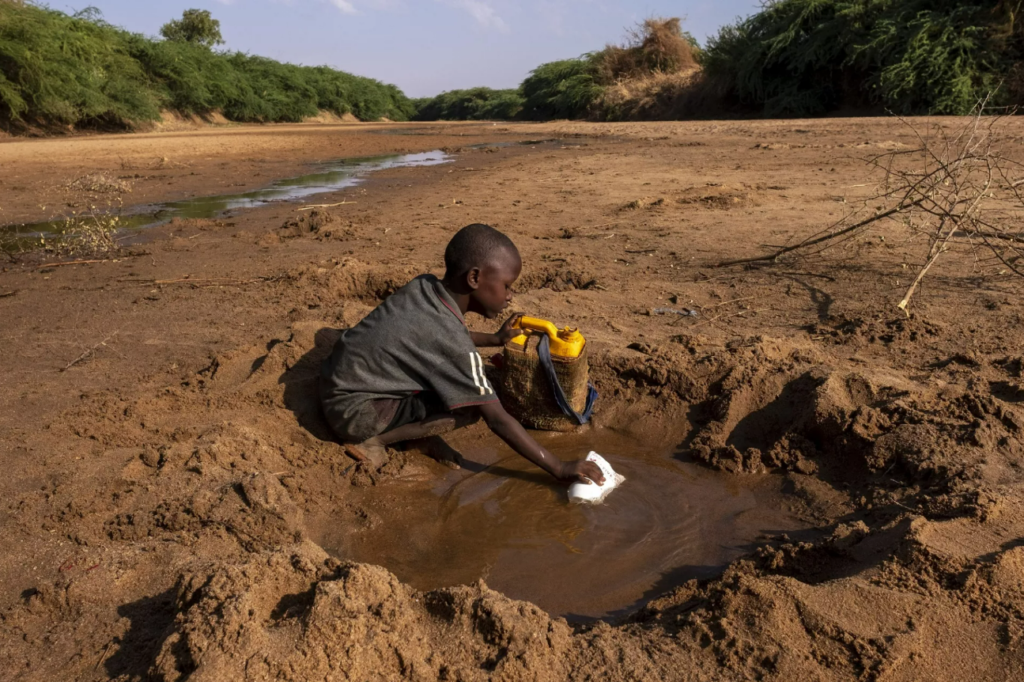
Current humanitarian giving in Somalia remains fragmented. Donations move through a maze of international NGOs, diaspora campaigns, and scattered local charities each operating independently, often with high administrative costs, complex procedures, and limited Somali ownership. This fragmentation weakens efficiency and transparency and delays the flow of help to those in urgent need.
For the first time in Somalia’s history, a national digital e-donations platform could change this reality creating a unified, transparent system that enables Somalis to support Somalis directly. Built on trusted local mobile money systems and managed by accountable national institutions, such a platform would make it possible for every citizen, business, and diaspora member to contribute easily and see their impact in real time. It would mark a new era of homegrown humanitarian solidarity where generosity is digitized, coordinated, and truly owned by the Somali people.
KEY DESIGN PRINCIPLES FOR THE PLATFORM
To make a national e-donations system credible, inclusive, and sustainable, its foundation must be rooted in Somalia’s social fabric, financial ecosystem, and religious values. The following principles outline how such a platform can transform the way Somalis give and receive aid building trust, efficiency, and solidarity from the ground up.
- Seamless Local Payment Integration
The platform should connect directly with Somalia’s dominant mobile money systems EVC, Edahab, and Premier Wallet allowing citizens to contribute instantly from their phones. This leverages existing trust in local fintech while eliminating barriers to participation, even in rural or low-income communities.
2. Transparent and Accountable Governance
A multi-stakeholder governance board comprising government oversight agencies, reputable NGOs, civil society representatives, and members of the Somali diaspora should oversee fund management and ensure integrity. This inclusive approach promotes accountability, reduces misuse, and strengthens donor confidence.
3. Real-Time Transparency and Public Insight
Interactive dashboards should display donation flows, allocations, and impact data across key humanitarian sectors such as education, health, WASH, food security, and climate resilience. Citizens can see where every Somali shilling goes enhancing trust through visibility.
4. Faith-Aligned Giving Framework
To resonate with Somalia’s 99% Muslim population, the platform should integrate Islamic-compliant giving models, including Sadaqa and Zakat options. Donors can fulfill their religious duties with assurance that their contributions reach the most deserving, in a way that honors both faith and community values.
5. Smart Targeting and Verification Systems
Through digital screening tools and data-driven mapping, the system can identify and prioritize IDP communities, climate-affected districts, and vulnerable groups such as widows and female-headed households. This ensures aid reaches where it’s needed most, not where it’s easiest to deliver.
6. Scalable and Replicable Design
With a modular architecture and open data standards, the platform can expand beyond humanitarian aid to support national development initiatives or even serve as a model for other African nations pursuing homegrown digital solidarity systems.
ILLUSTRATIVE SCENARIO: THE POWER OF LOCAL GIVING
Imagine a Somalia where just one million citizens contribute only fifty cents ($0.50) each month through a unified digital e-donations platform. This small act of generosity would generate $500,000 every month or an impressive $6 million per year entirely from Somali people, for Somali people. Such a locally driven model would mark a historic milestone in Somalia’s humanitarian landscape, transforming compassion into collective power through technology.
If managed transparently and strategically, this $6 million annual fund could address multiple humanitarian priorities. For instance, 45 percent ($2.7 million) could be allocated to emergency food and cash assistance, providing a three-month relief package worth $60 to approximately 45,000 vulnerable people facing hunger and displacement. Another 20 percent ($1.2 million) could support emergency shelter kits at a cost of $300 each, helping around 4,000 households secure safety and dignity.
Education could receive 15 percent ($900,000) of the fund, enabling roughly 6,000 children to access schooling for a full year at an average cost of $150 per child. Meanwhile, 15 percent ($900,000) could be directed toward Water, Sanitation, and Hygiene (WASH) programs, financing around 400 new community water points, each serving about 500 people. This alone would improve water access for 200,000 Somalis, particularly in drought-prone or displaced communities.
The remaining 5 percent ($300,000) would cover essential operational and verification costs ensuring the platform’s reliability, data transparency, fraud prevention, and donor (Somalis) reporting. These administrative functions are crucial for maintaining the integrity and long-term scalability of the system, building trust among both contributors and recipients.
Alternatively, if the platform prioritized immediate life-saving interventions, directing 80 percent of all funds toward food and cash relief, this could support as many as 80,000 people with three-month emergency packages each year. In either model, the message remains powerful: through small, collective digital donations, Somali citizens could fund large-scale humanitarian impact entirely from within their own borders.
This scenario underscores the transformative potential of a national digital e-donations system one rooted in solidarity, trust, and faith. It proves that when technology is aligned with compassion, Somalia can move from dependency to self-reliance, building a future where humanitarian aid flows not from distant donors, but from the hearts and hands of its own people.
ANTICIPATED IMPACT
The establishment of a national digital e-donations system in Somalia has the potential to fundamentally transform the country’s humanitarian landscape. By shifting from dependency on unpredictable international aid to a locally driven, technology-enabled model, Somalia could pioneer a new era of self-reliant humanitarianism.
Economically, the platform would mobilize domestic micro-donations at scale, converting individual acts of giving into a reliable and sustainable national fund. Even minimal monthly contributions could collectively generate millions of dollars annually enough to sustain essential programs in food security, health, education, and climate resilience. This would significantly reduce the financial vulnerability of local NGOs and enable Somali institutions to plan and act with greater autonomy.
Socially, the system would reinvigorate the spirit of solidarity and trust within Somali society. By framing humanitarian giving as “From Our People to Our People,” the initiative would strengthen the social fabric and revive the traditional Islamic values of Sadaqa and Zakat in a modern, digital form. It would reconnect citizens from Mogadishu to Hargeisa, from the diaspora to the displaced through a shared sense of responsibility for one another.
Institutionally, the platform would enhance accountability and transparency by using real-time dashboards, independent oversight mechanisms, and data-driven reporting. This transparency could help rebuild public confidence in local governance and charitable organizations, inspiring more citizens to participate.
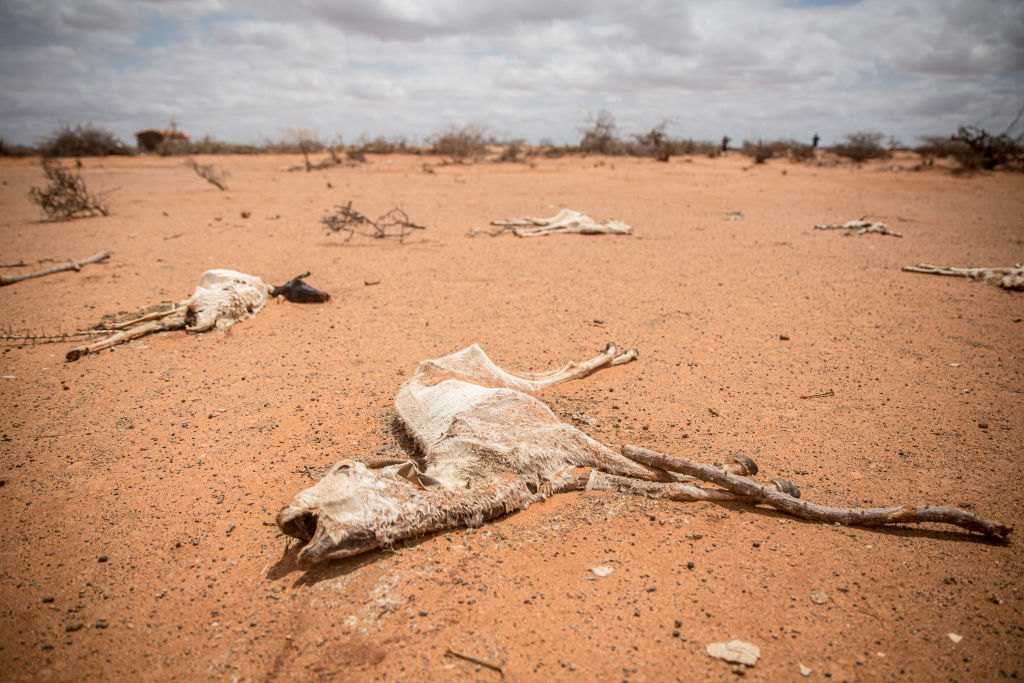
In humanitarian terms, the system could directly reduce suffering, save lives, and expand resilience for hundreds of thousands of Somalis each year. The reliable flow of local resources would allow faster responses to droughts, floods, and food crises closing the gap between crisis onset and aid delivery.
Ultimately, the anticipated impact extends beyond charity: it represents a strategic reimagining of how Somalia finances and delivers compassion. Through digital innovation and community trust, Somalia can set a precedent for the world proving that a nation once defined by aid dependence can lead in humanitarian self-sufficiency.
CONCLUSION
This vision from our people to our people is not just a slogan; it is a roadmap for Somali humanitarian giving in the digital age. A unified digital e-donations system aligned with our Islamic heritage and our rising digital economy can shift the paradigm: from donors to us, instead to us giving to us. Let technology serve our solidarity, let our culture of giving meet our mobile-money economy, and let our people save lives through one unified platform.
By designing this system together, we reaffirm our values, strengthen our resilience, and build a humanitarian future rooted in Somali ownership.