
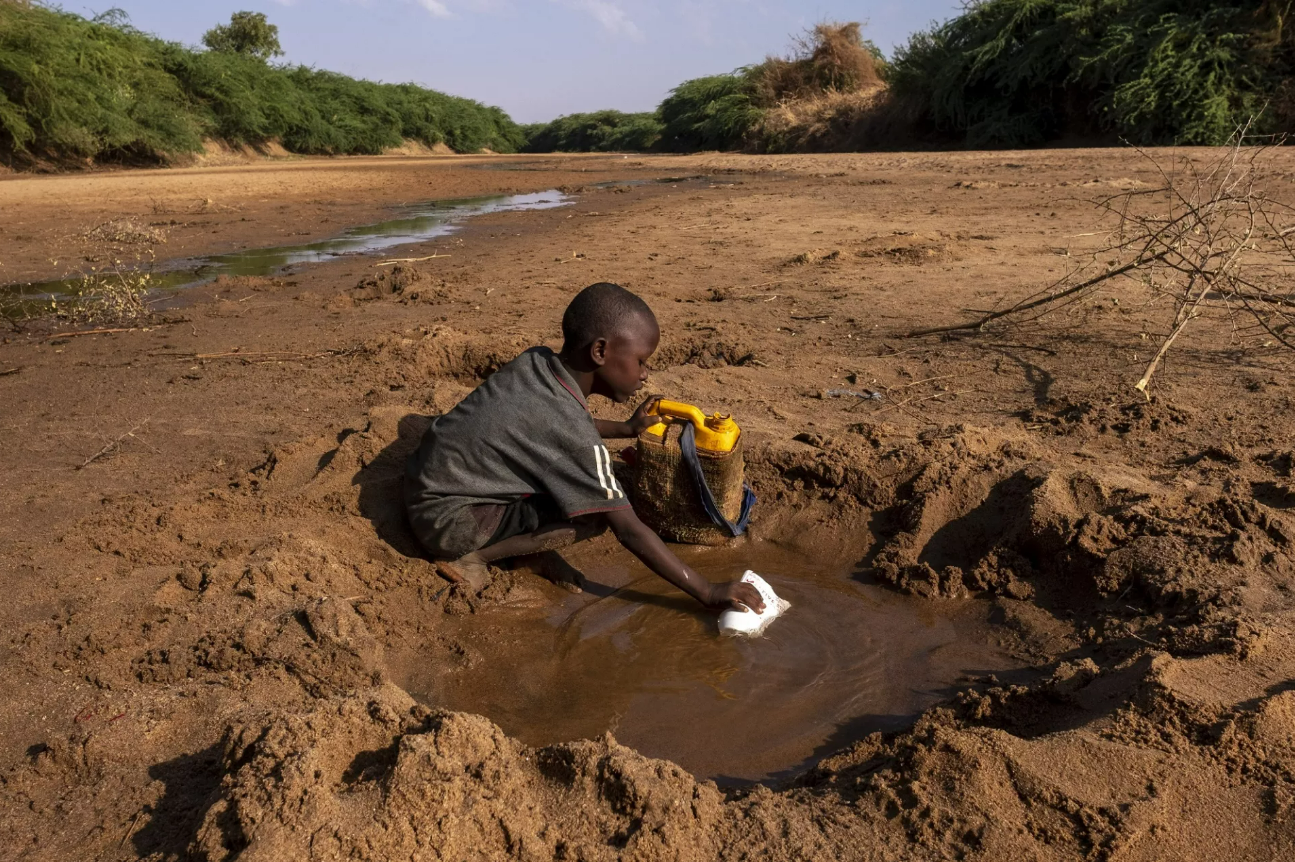
Somalia’s drought is often described in large numbers 6.5 million people in crisis, 3.7 million outside the aid net. But for women and children, this crisis is not only about statistics. It is about the body reaching its breaking point.
For them, drought is not simply the absence of rain. It is the rapid collapse of biological survival.
Across the country, an estimated 1.84 million children are acutely malnourished. Among them, around 500,000 are in the “red zone” of Severe Acute Malnutrition (SAM) the most dangerous stage. A child in this condition is not just thin. Their immune system is weakened. Their muscles shrink. Their organs begin to struggle. Without therapeutic feeding and clean water, a severely malnourished child faces a mortality risk many times higher than a healthy child.
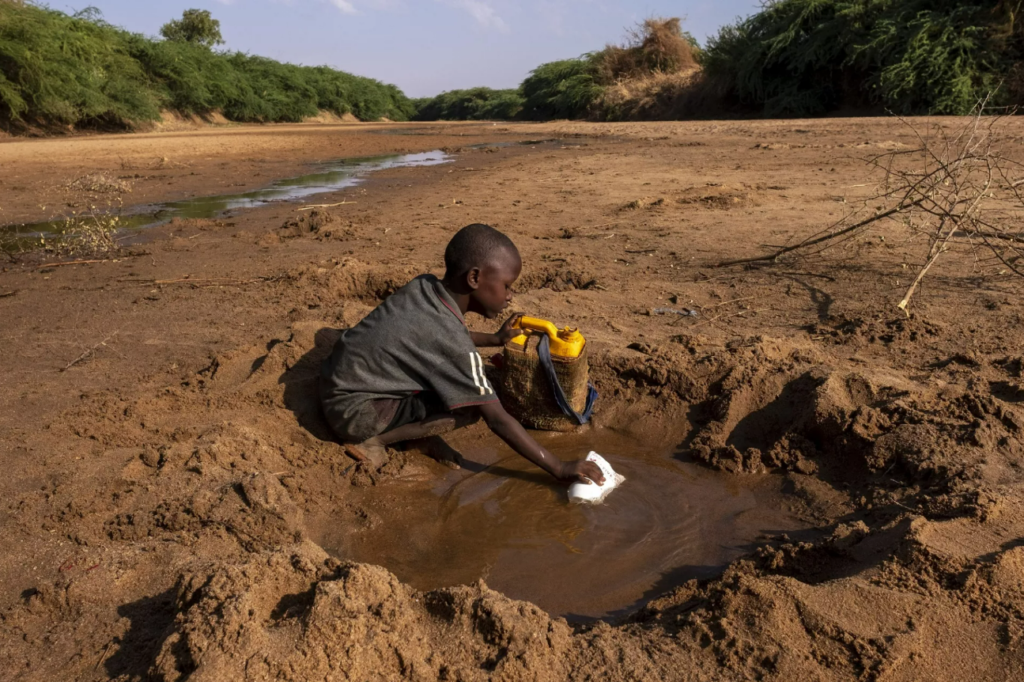
In drought conditions, hunger and thirst combine in a deadly loop. When wells dry up, families turn to unsafe water sources shallow puddles, contaminated ponds, or distant seasonal rivers. Children drink this water because they have no choice. Within days, many develop Acute Watery Diarrhea (AWD). Diarrhea drains the body of fluids and nutrients. A child who was moderately malnourished can fall into severe malnutrition very quickly.
This is the “water-hunger loop.” A child does not just starve. The child dehydrates, loses nutrients, becomes weaker, and enters a spiral that is hard to reverse without immediate treatment.
The crisis is not limited to children.
Women, especially mothers, are often the last to eat and the furthest to walk.
Current estimates show that around 109,000 pregnant and breastfeeding women are malnourished. These women are carrying children or feeding infants, yet their own bodies are depleted. In many drought-affected areas, boreholes have dried up. Women now walk between 10- and 15 kilometers each day in search of water. They carry heavy jerrycans often 20 kilograms or more back to their families.
This physical strain, combined with insufficient food intake, is leading to extreme exhaustion. Health workers report increasing cases of maternal weakness and pregnancy complications linked to dehydration and malnutrition.
Inside the household, a painful pattern emerges. In Somali culture, women often prioritize feeding children and men first. During normal times, this reflects care and responsibility. During drought, it becomes dangerous. Many mothers are surviving on less than 800 to 1,000 calories per day, far below the 2,100 calories needed for basic survival. They are expected to produce breastmilk, walk long distances for water, and manage the household all while operating in a severe calorie deficit.
The drought has also created a harsh economic squeeze.
In regions such as Gedo and Bay, the price of a 200-liter drum of water has reportedly increased by more than 150% since late 2025. At the same time, crops like maize and sorghum have failed. Labor wages have not increased to match rising prices.
For many mothers, daily life has become a painful calculation. Should she buy clean water or a kilo of sorghum? If she buys water, there may not be enough food. If she buys food, the family may drink unsafe water and risk disease.
This is not an abstract dilemma. It is a daily decision between hunger and thirst.
To understand the scale of suffering more clearly, we must look at what this means inside a single displaced household.
Imagine a typical family of one mother and four children. The minimum survival requirement for water is about 7.5 liters per person per day for drinking and basic hygiene. That means the household needs around 37.5 liters daily. Yet in many drought-hit camps, families survive on less than 2 liters per person. This creates a daily water gap of approximately 27 liters per family.
If we extend this reality across the estimated 3.7 million people in the humanitarian gap, Somalia is currently missing over 23.7 million liters of clean water every single day for the 3.7 million people trapped in the humanitarian gap.
Food tells a similar story. A person requires around 2,100 calories per day to survive. In crisis zones, many women consume less than half of this amount. For a mother and four children, the family may be missing more than 5,000 calories each day the equivalent of several full meals simply absent from their lives.
This is what the drought looks like at ground level. It is not only dry land. It is shrinking bodies. It is mothers depleting their own strength to keep infants alive. It is children whose growth is stunted not only by hunger, but by repeated illness caused by unsafe water.
The 2026 drought has created what can only be described as a biological deficit. Children are physically shrinking due to wasting. Mothers are draining their own body reserves to protect their families. The Somali family unit the core of society is being systematically weakened by lack of rain, lack of resources, and lack of sufficient response.
Humanitarian agencies continue to operate. They are delivering water, nutrition treatment, and cash assistance where funding allows. But the scale of need is greater than the scale of current response.
If urgent support does not reach women and children soon, the consequences will not only be temporary hunger. They will include long-term developmental damage, increased maternal mortality, and a generation of children growing up with the physical and cognitive impacts of malnutrition.
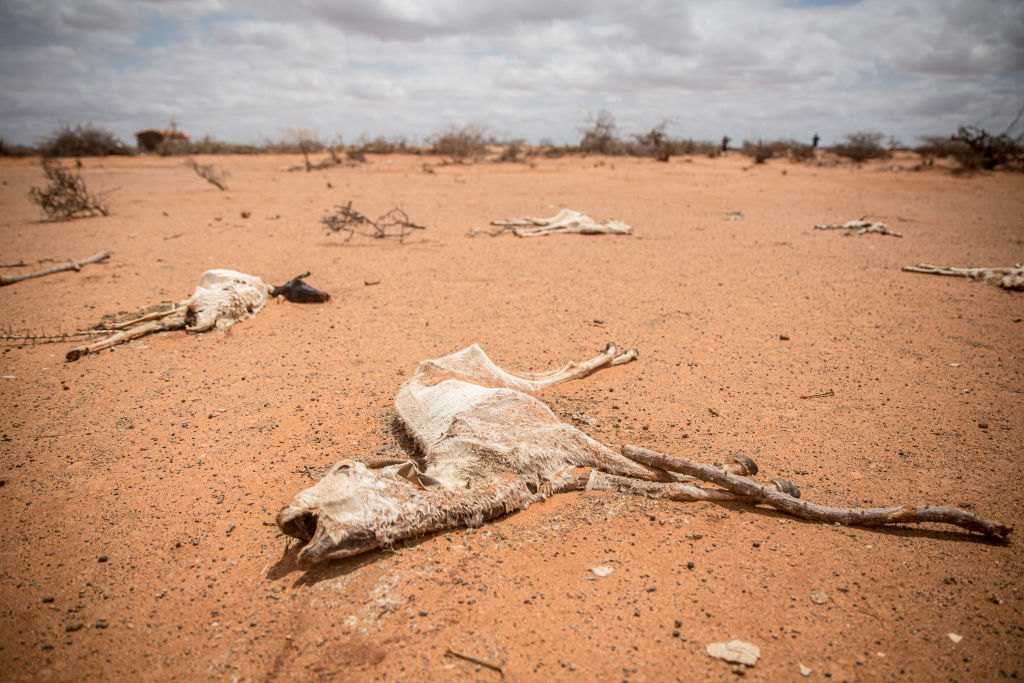
Somalia’s drought is not just an environmental crisis. It is a crisis of survival for women and children whose bodies cannot wait for delayed funding cycles.
Featured Image Rights: UNICEF/UN0607653/Rich